
St.Barnabas Community Week - Playing Out
Helen and Phil spent an afternoon with Year 6 pupils at St.Barnabas School recently – the latest in a series of occasional visits to the school stretching back over about twenty years. Our aim was to talk with the children about playing out – what they liked to do and who with, and where were the best places for this?
It’s a good time to be having this sort of conversation. The York Central development will change the area – immediately expanding the neighbourhood to the south where previously it had been an island between Water End, the river and the railway lines and railway land. Children’s voices are regularly under-represented in the shaping of new development. The Civic Trust’s comments on the developer’s current proposal notes that “Some documents refer to Play Streets… …whilst there is little definition as to how these will be achieved”. Delivering on aspirations can be complex. And what sort of places do children want?
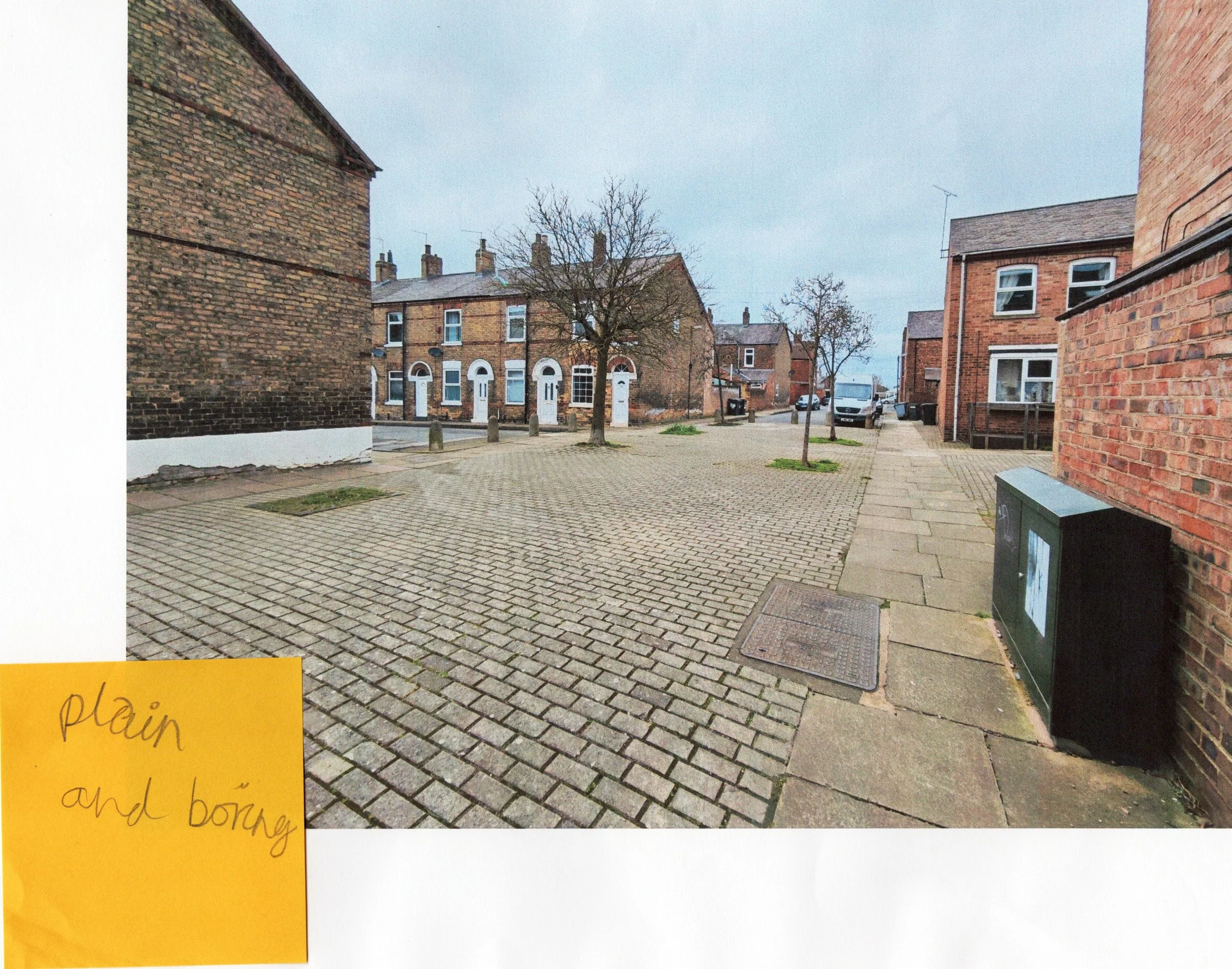
We started by prompting conversations with photographs from around the Leeman Road area. Very much in line with YoCo’s thinking that “kids playing in the street is about more than removing the cars” the car-free bollarded areas got the thumbs-down.
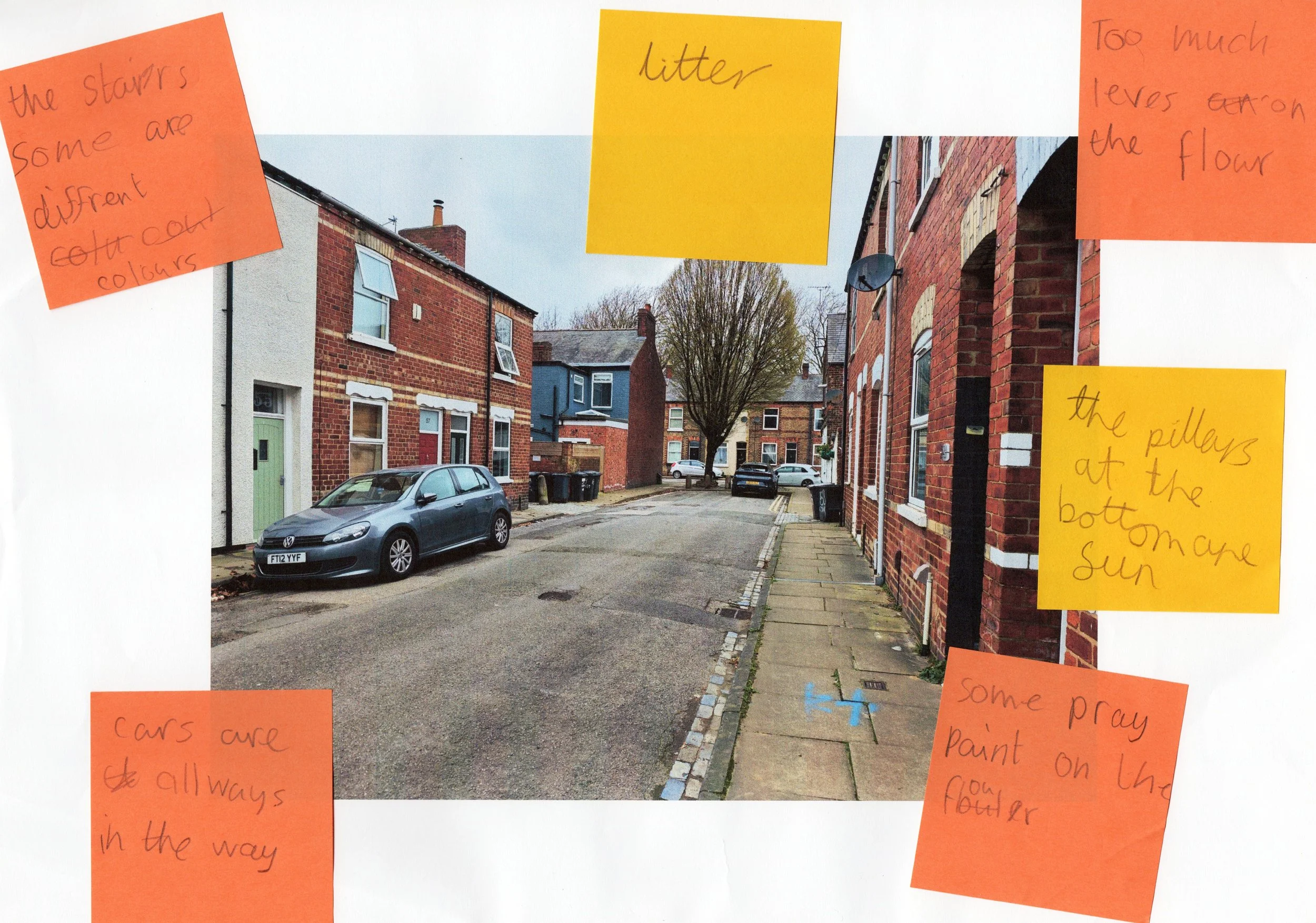
More positive were comments around streets where there were more “features” which provided props or cues for play – steps, colour, raised elements to stand on. But if cars are present then they are a problem.
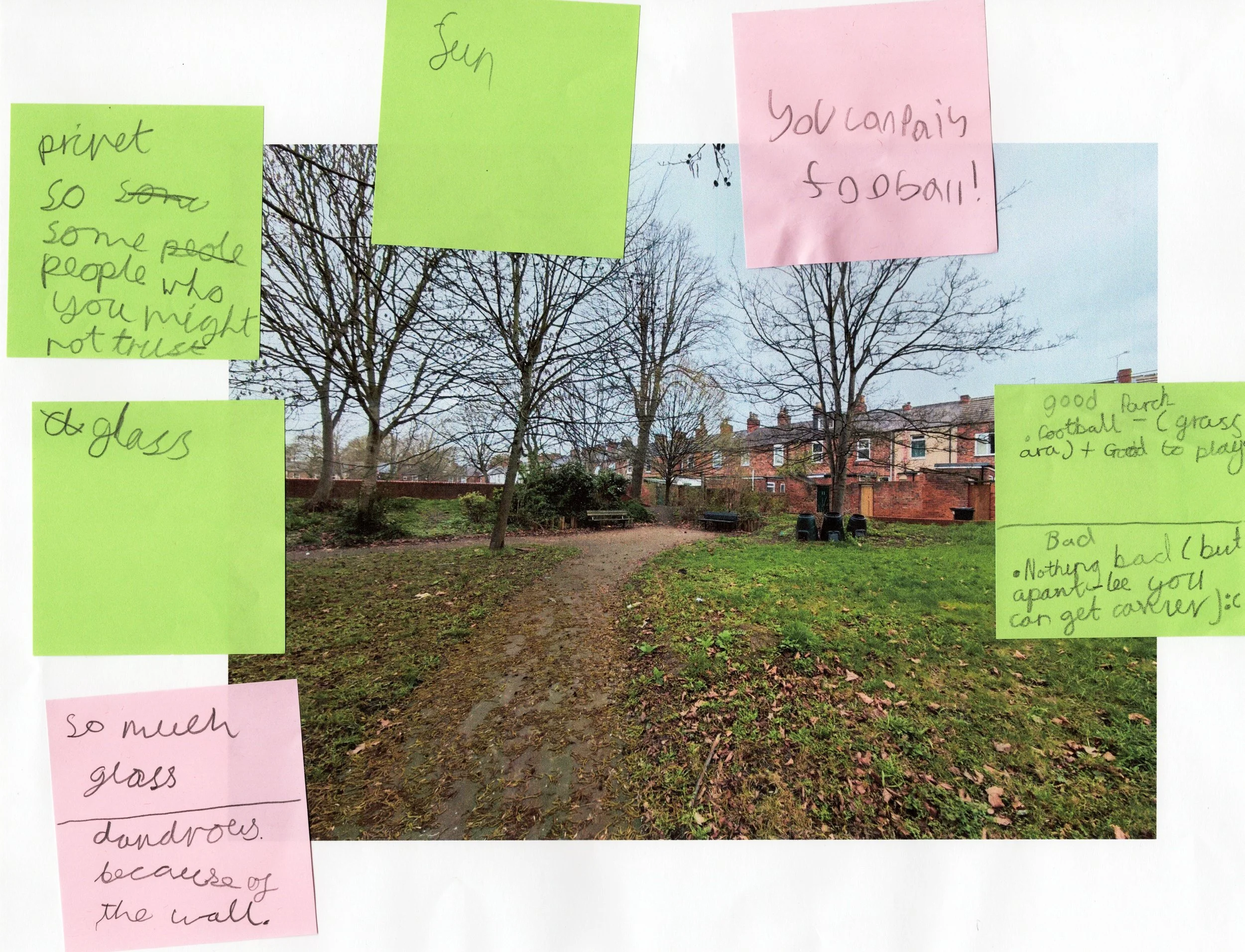
Green space that was car-free attracted positive comments – particularly around suitability for ball games, creating “dens”, meeting friends without getting chased off. But there were concerns too – the need for maintenance (to avoid problems with broken glass or litter) and worries about enclosure providing places for unwelcome strangers.
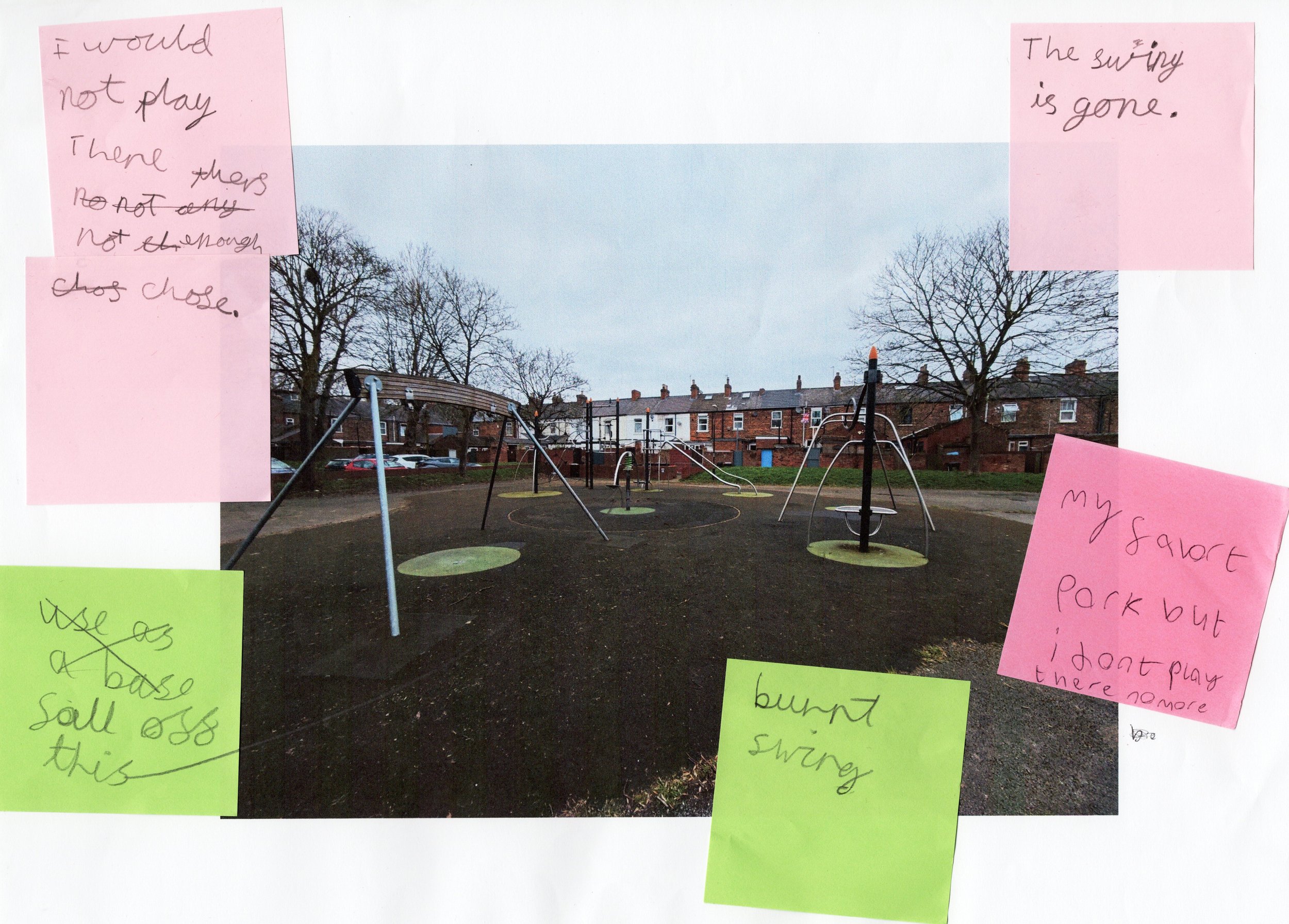
More formal play areas – with play equipment – got mixed comments. There were positive comments about specific elements – zip wires are popular – but also frustrations; specific equipment has a specific use, and so variety of play requires a variety of specific pieces of equipment. Where these aren’t maintained and suffer vandalism, choice is reduced and places become less appealing.
There were general comments which are worth noting – albeit in the context that these were fairly young children (around 10yo). Fundamental to any playing out was safety in getting there; if it meant crossing a road which had significant traffic then parents wouldn’t allow them to go there unaccompanied. Closer is better – the children talked most about places which were adjacent to where they lived. And wilder areas – for this age group at least – were not viewed positively – the children talked about mud, dog mess and the danger of unseen spaces rather than in any positive way about wildness and nature.
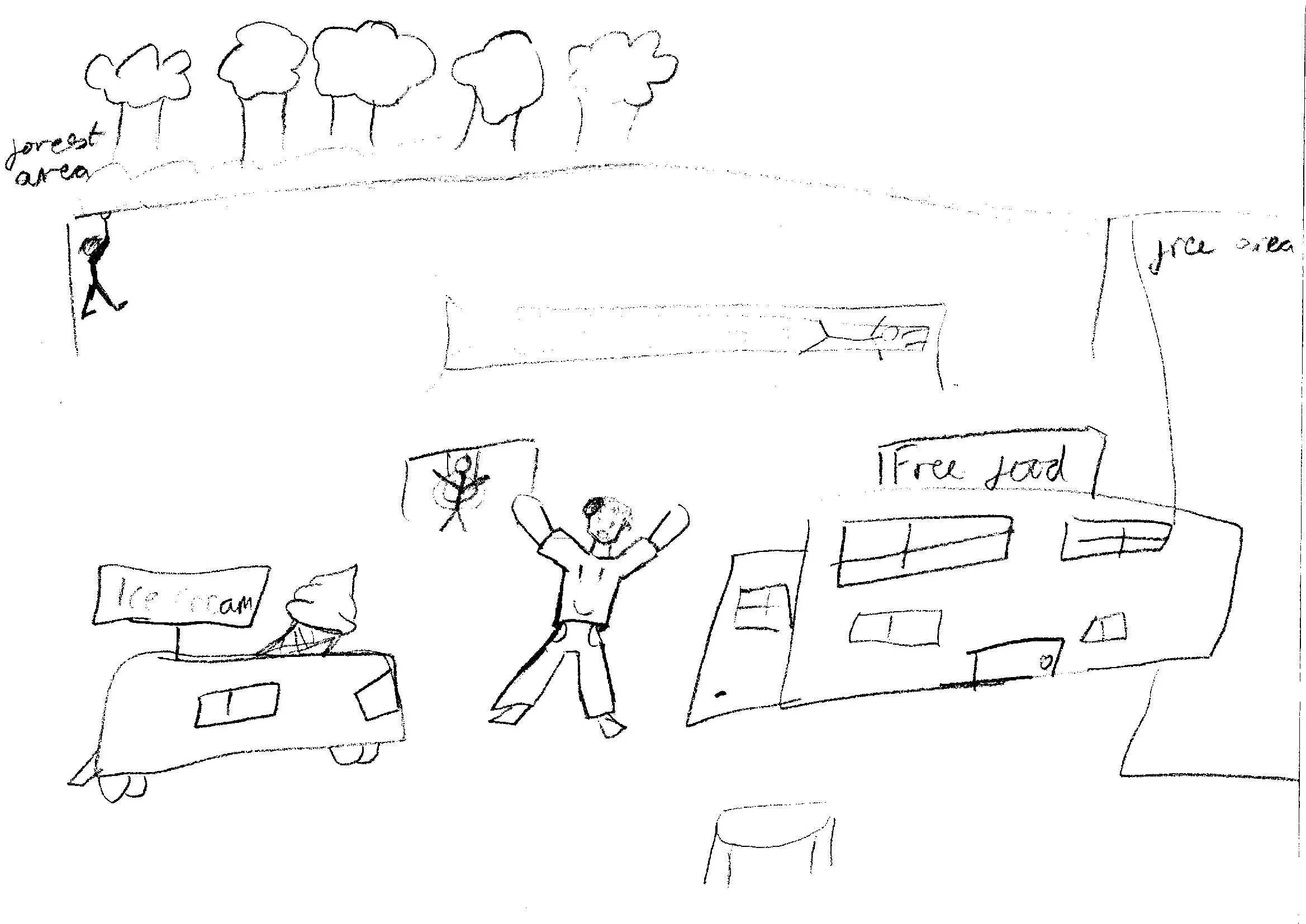
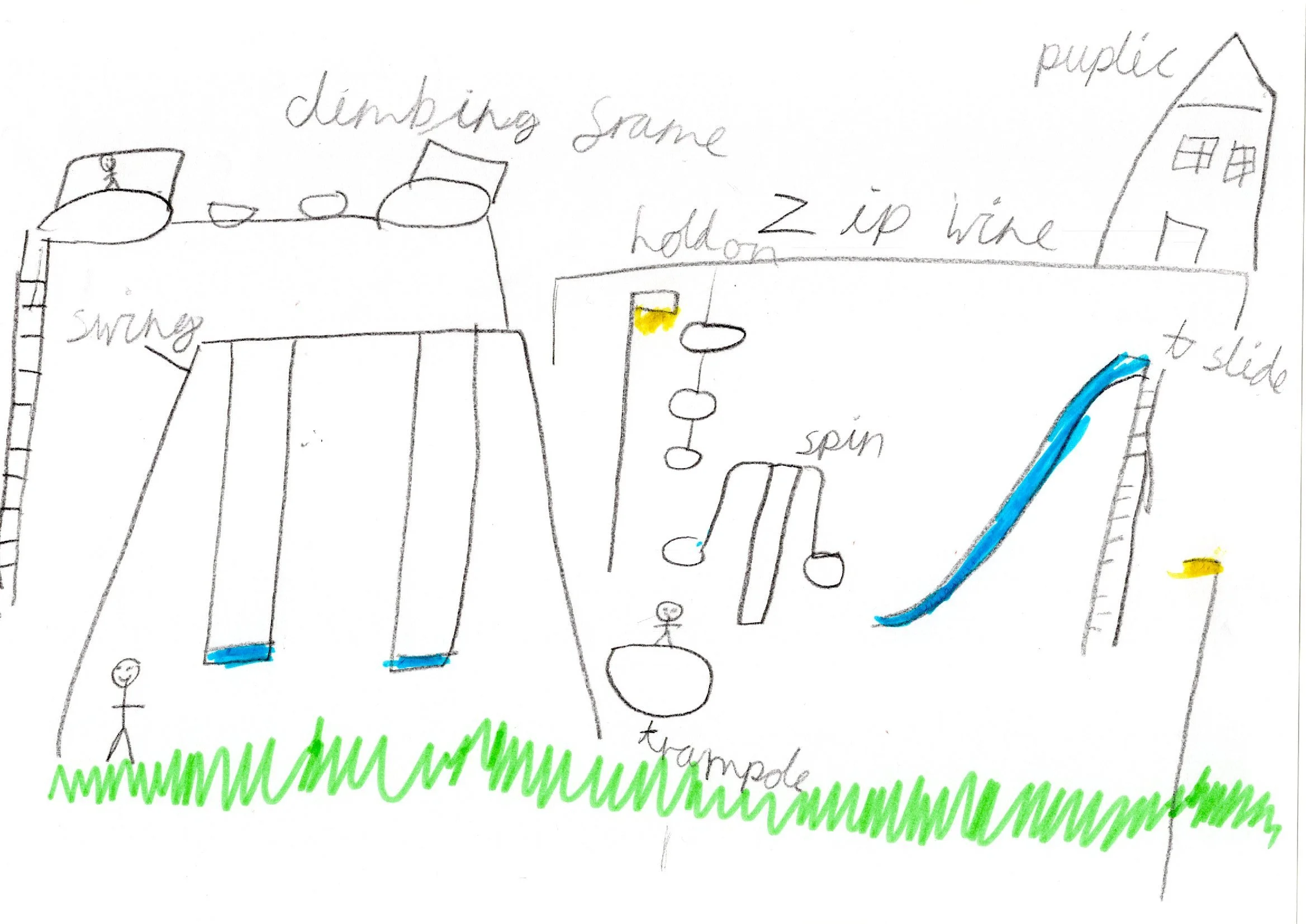
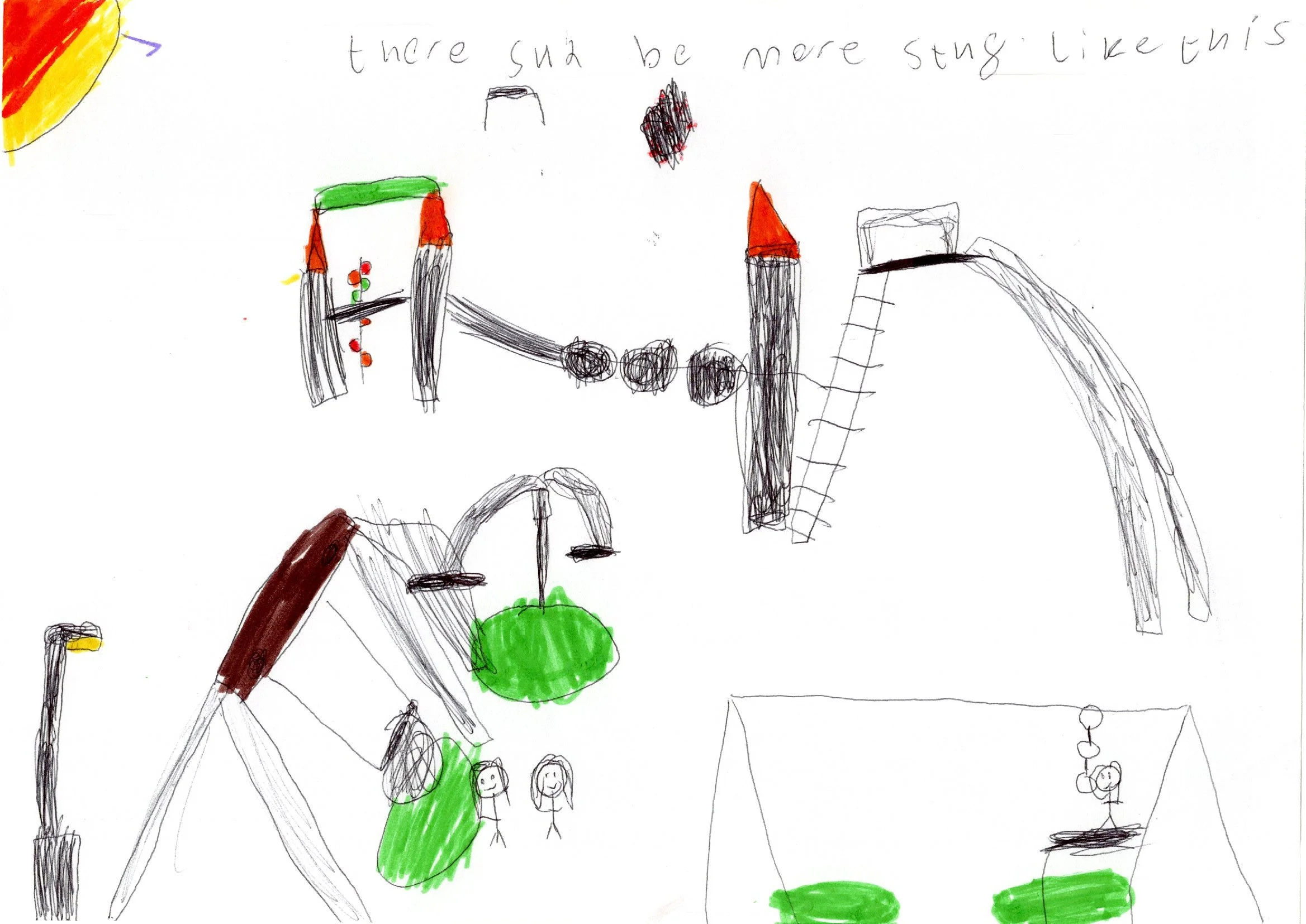
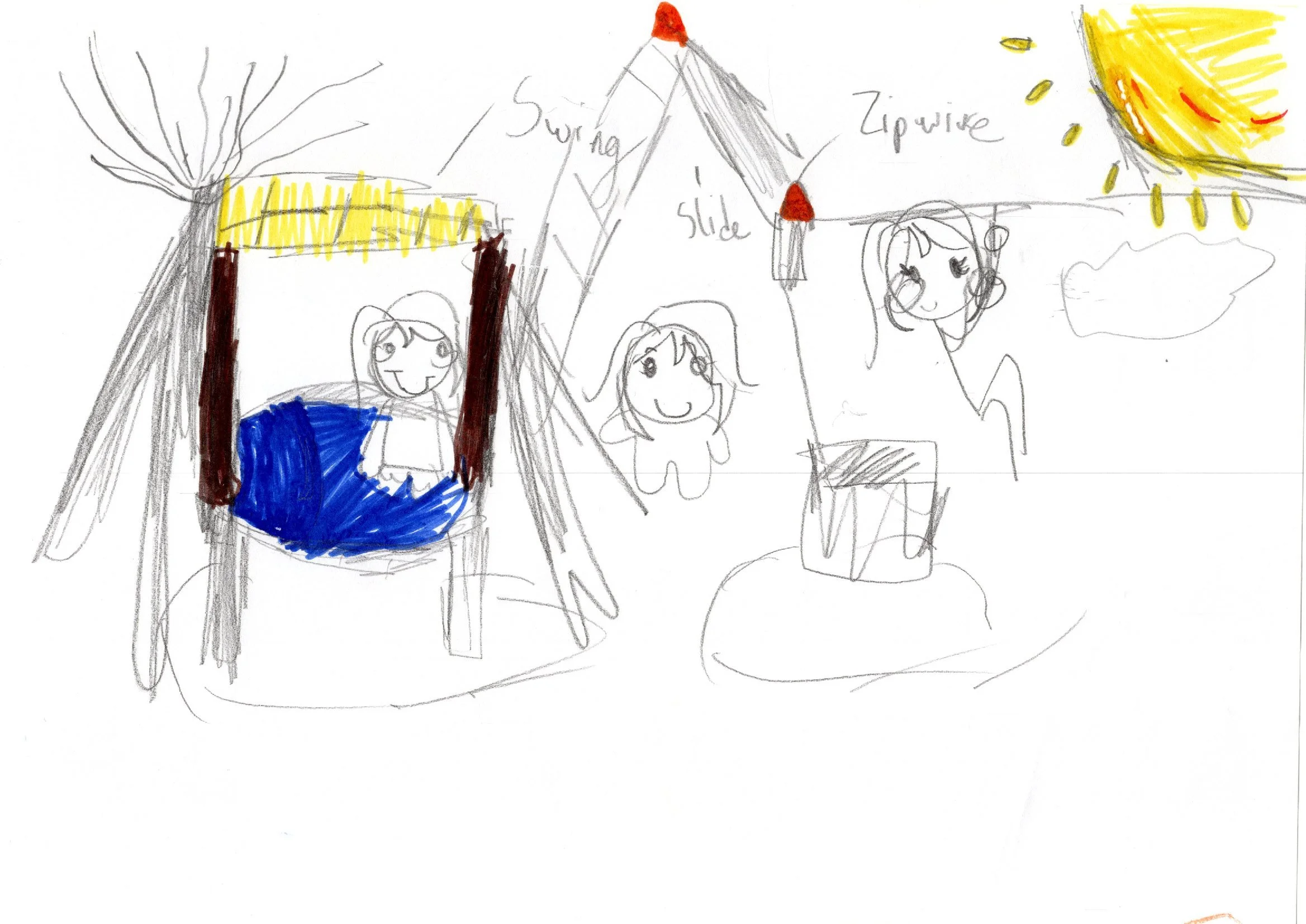
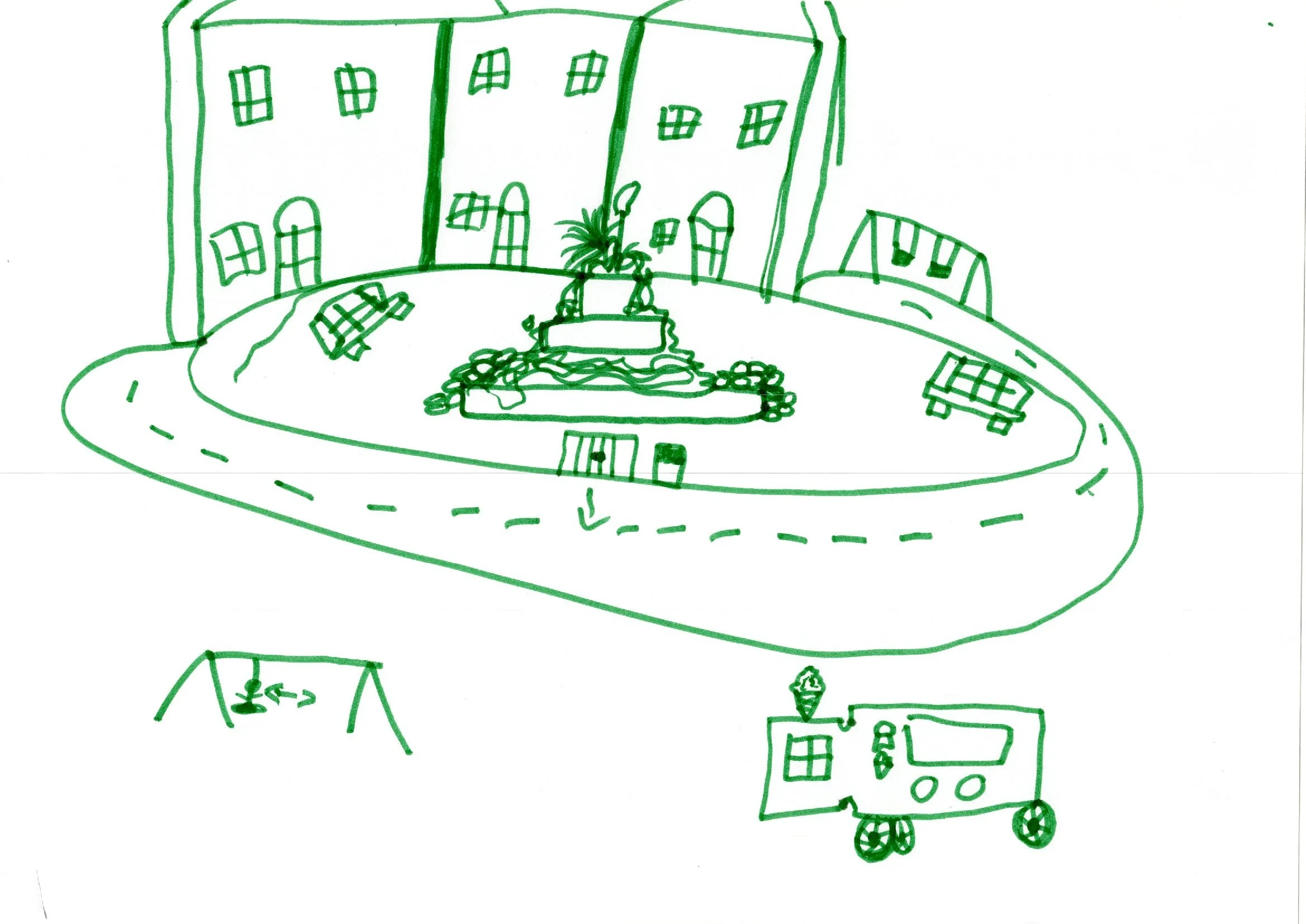
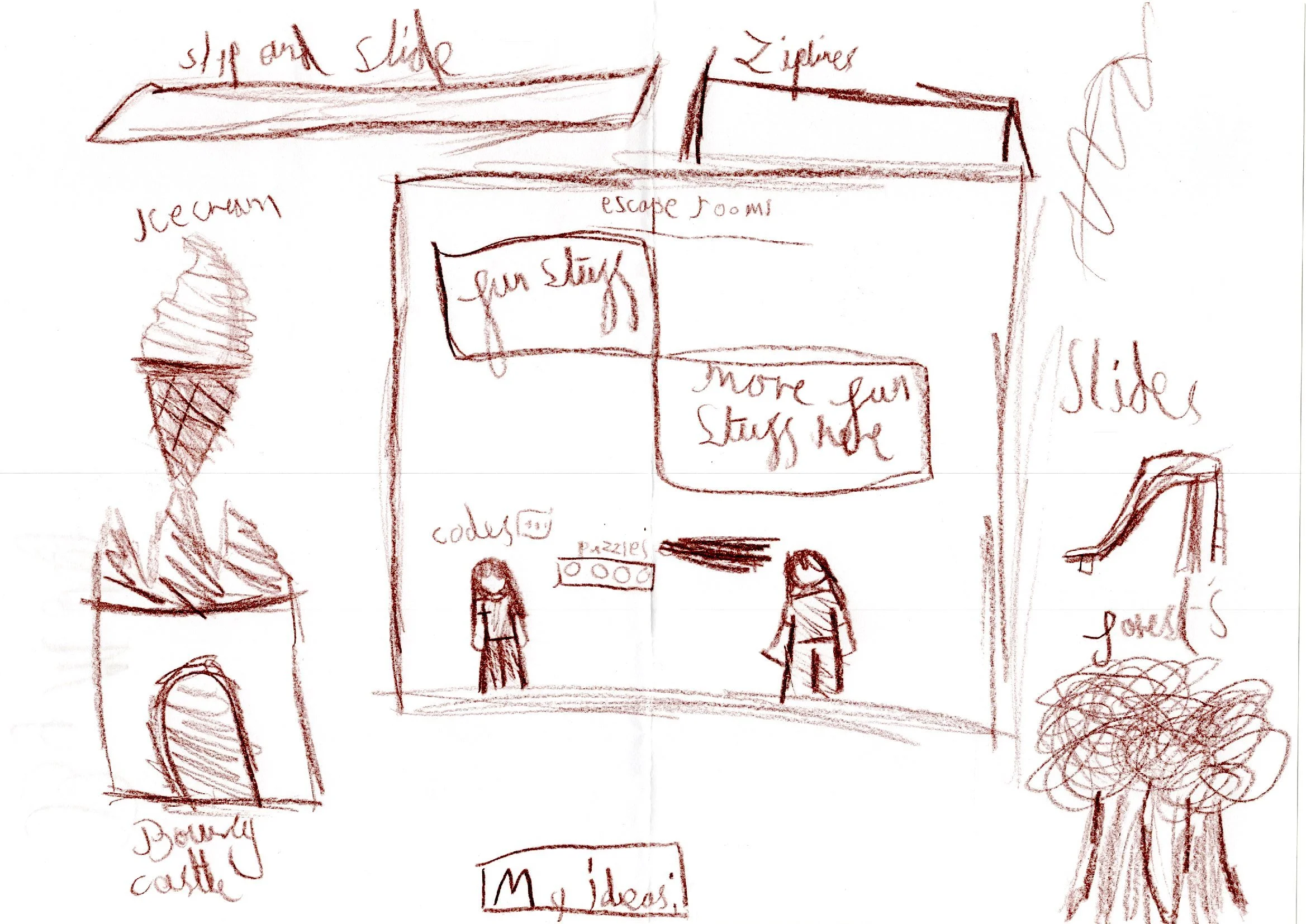
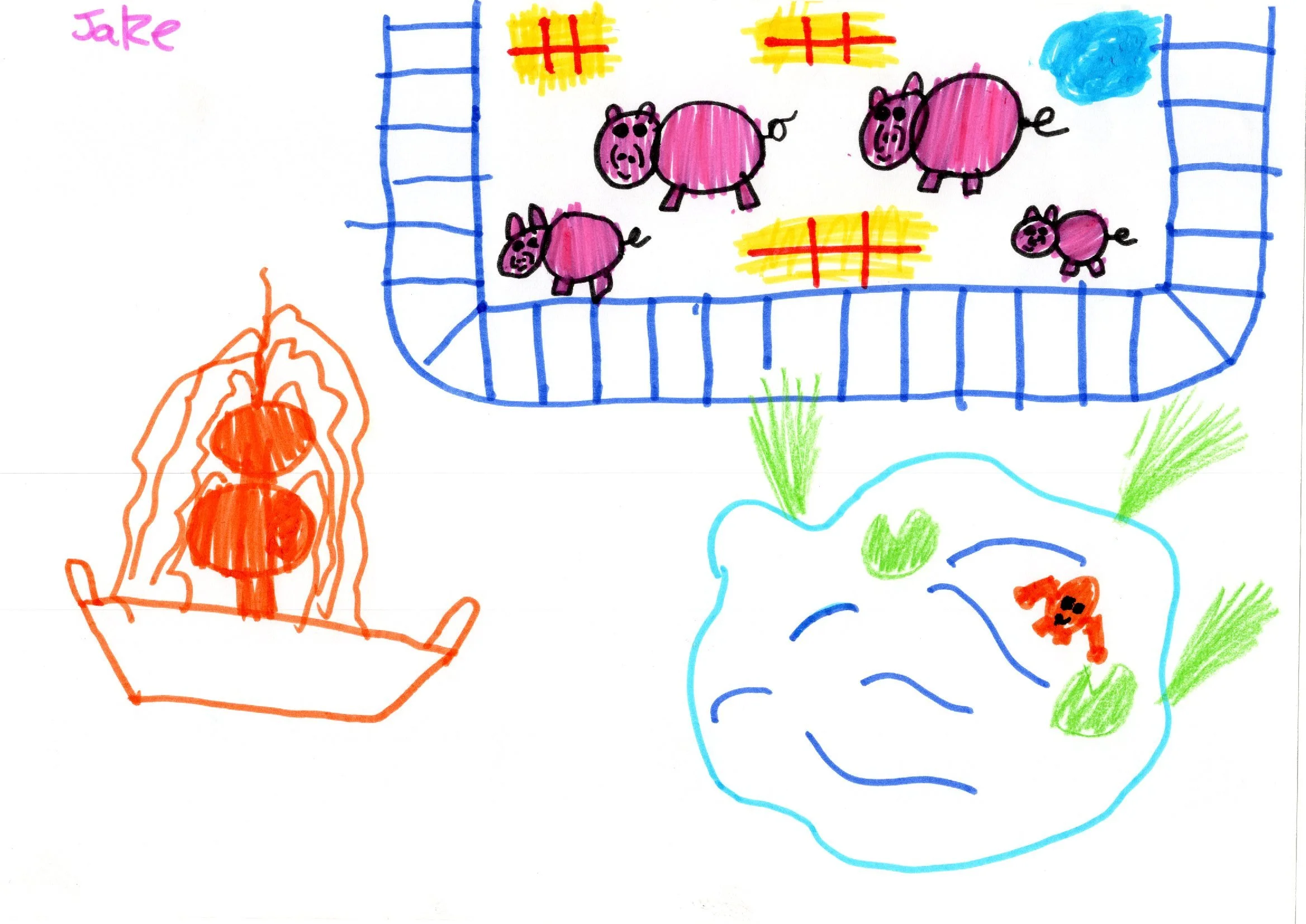
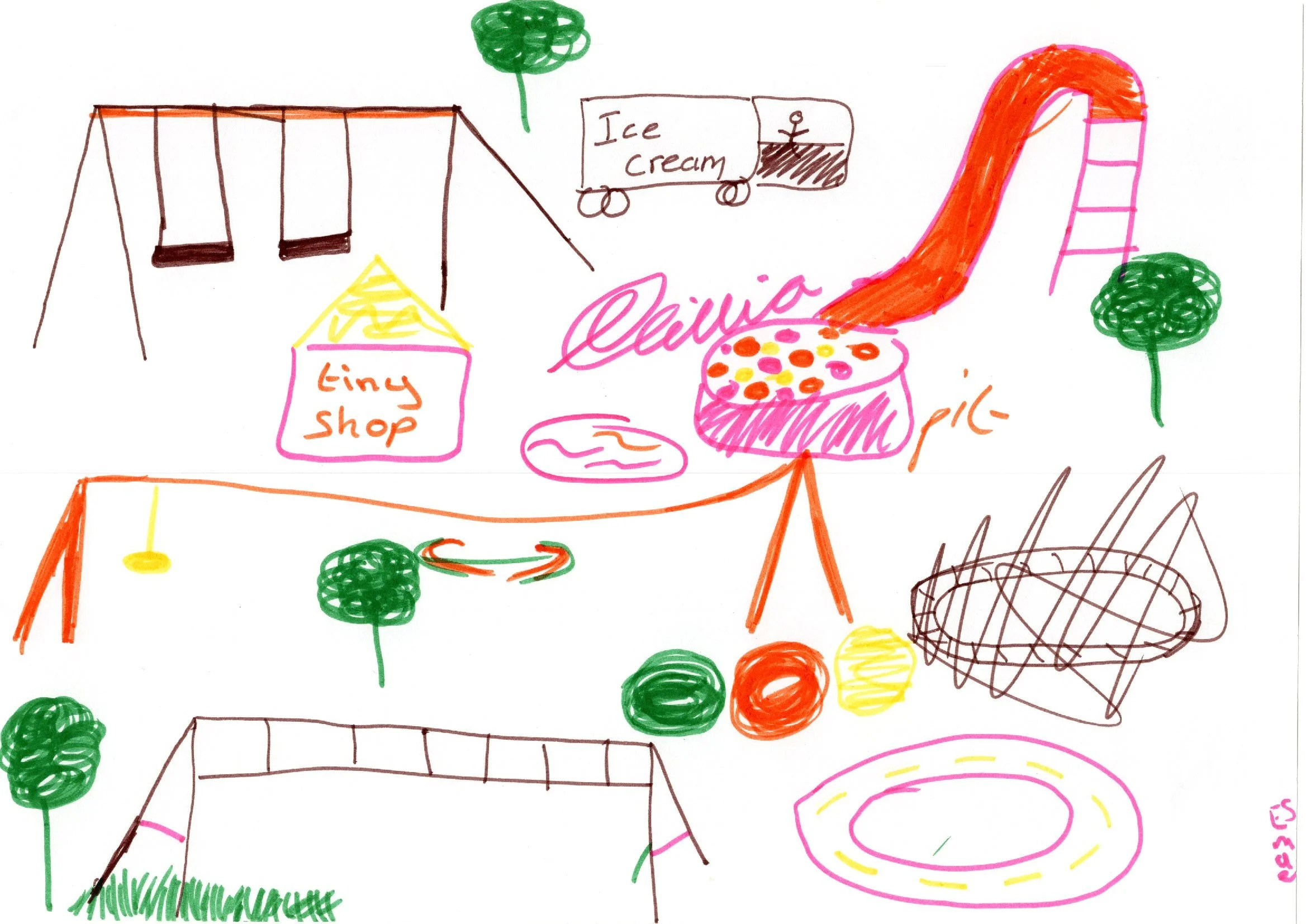
We then asked them to illustrate their idea of an ideal place to play. There were – perhaps understandably – a lot of pictures of formal play spaces – but still some very useful information within them. As noted above, variety was the key – swings, slides, spinners, zip-wires, trampolines, climbing frames and nets. There was the suggestion of edgier stuff like an escape room, puzzles and codes, and the props that accompany action play. There was a suggestion for an urban farm (filled with gloriously pink pigs) and water – be it natural ponds or – better – fountains (of the sort parents wouldn’t object to their kids getting wet in).
There was also reference to the things that make being out complete – ice-cream, and local corner shops for easily-available snacks. There was one suggestion of an adjacent pub, although that maybe flags up a particular parent/child relationship!
There was also discussion of management/maintenance – places were more inviting if they looked cared-for. The whole issue of “NO BALL GAMES” signs was touched on, and there was one very poignant picture of a local “no ball games / no play” space transformed with a flowing fountain and patrolling ice cream van.
Lastly we took a walk around the school’s outdoor spaces – seeing where the children headed for, and talking with staff about the difficulties of managing play. There is pressure from the kids to explore uses – posts are climbed upon, bars are used to get upside-down, and staff spend much time going against their inclination to encourage adventure – talking the children down in order to reduce risk of harm.
Landscape elements which encourage imaginative play – spaces which can have identity or stories attached to them; enclosure which still allows supervision (the school has a willow maze, but in a location which cannot be supervised during playtimes and so is out of bounds). Any opportunity to bring change and to widen the opportunities for creative play would be valuable.
As noted in the introduction, we’ve had conversations with local kids about play over a very long timescale. Almost 25 years ago St.Barnabas pupils spelled out the games they played in their neighbourhood…
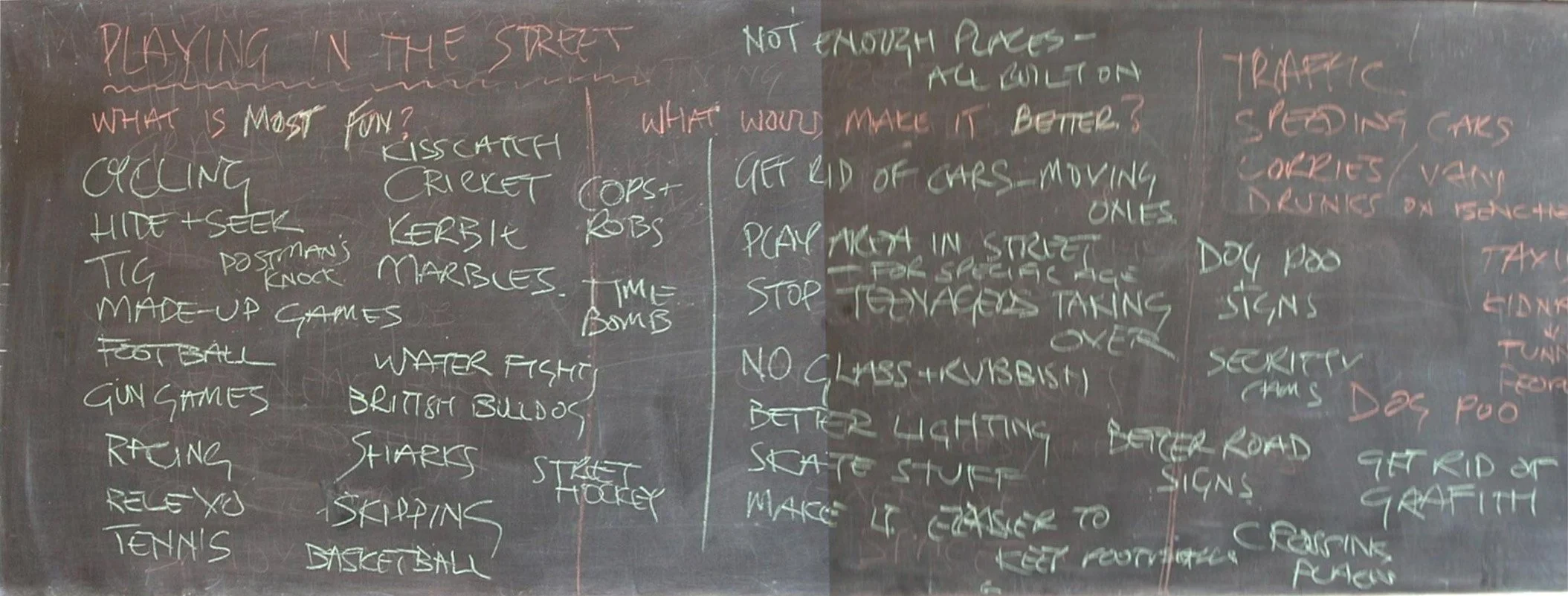
Times change, and new opportunities come along, but creating a neighbourhood which gives children agency (being safe enough for them to have some control over use of it) and opportunity (the cues and props required for creative play-making) still has value. Places which work for children also work for families, and places which are used bring broader benefits to all. When we talk of creating vibrant neighbourhoods, we need to provide the framework which enables local people to bring that life.
Further resources:-
All To Play For – Dinah Bornat and RIBA Publishing
Project Wild Thing – 2014 film by production company Green Lions